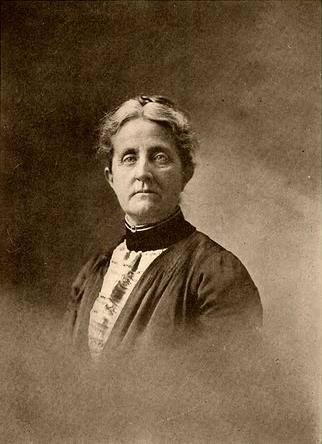
 Mary Watson Whitney (September 11, 1847 – January 20, 1921) was a pioneering American astronomer and mathematician who dedicated her life to expanding career opportunities
for women in the sciences.
Mary Watson Whitney (September 11, 1847 – January 20, 1921) was a pioneering American astronomer and mathematician who dedicated her life to expanding career opportunities
for women in the sciences.Partner Caroline Furness
Queer Places:
Vassar College (Seven Sisters), 124 Raymond Ave, Poughkeepsie, NY 12604
University of Zürich, Rämistrasse 71, 8006 Zürich, Switzerland
Grove Hill Cemetery, 290 Main Street, Waltham, Massachusetts 02453 United States
Mary Watson Whitney (September 11, 1847 – January 20, 1921) was a pioneering American astronomer and mathematician who dedicated her life to expanding career opportunities
for women in the sciences.
Born in Waltham, Massachusetts, Whitney excelled in mathematics from a young age. She entered Vassar College in 1865 on its opening day, joining the first graduating class of 1868. There, she became a close protege of Maria Mitchell, the famous astronomer, and was a key member of "The Hexagon"—a dedicated group of six astronomy students who felt the weight of proving women's academic capabilities.
Because women were barred from officially registering at Harvard, Whitney attended celestial mechanics courses there as a guest under Benjamin Peirce. She later earned her Master’s degree from Vassar (1872) and spent three years studying mathematics at the University of Zürich.
In 1881, she returned to Vassar as Mitchell’s assistant. When Mitchell retired in 1888, Whitney took over as a professor of astronomy and director of the Vassar College Observatory, a post she held until 1915. Under her 22-year leadership, the observatory became a premier research institution, publishing 102 scientific papers primarily focused on variable stars, double stars, comets, and asteroids.
While 19th- and early 20th-century historical records do not use modern terminology like "lesbian" or "queer," Mary Watson Whitney’s life sits squarely within historical patterns analyzed by LGBTQ+ and women's historians.
During Whitney’s era, pioneering academic women frequently formed deeply committed, lifelong domestic partnerships with other women. Often referred to as "Boston marriages," these arrangements allowed women to pursue ambitious careers without the legal, financial, and domestic restrictions of traditional heterosexual marriage.
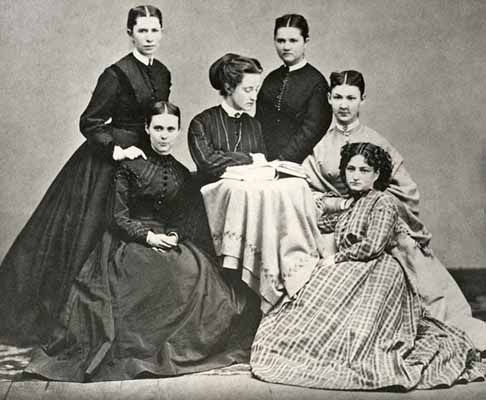
The "Hexagon" with Mary Whitney at the centre
Whitney never married a man. In 1894, using her own personal funds, she hired her former student Caroline Ellen Furness as her research assistant. Furness eventually lived and worked alongside Whitney at the Vassar Observatory.
Their relationship was a deeply collaborative partnership that mirrored Whitney's earlier bond with Maria Mitchell. Furness described Whitney as giving off "such a bright glow that it lightened all who came within its sphere". When Whitney's health began to fail in 1910, Furness stepped in to take over her duties and officially succeeded her as the observatory director and chair of the astronomy department upon Whitney's retirement. Furness also acted as Whitney's champion after her death, publishing biographical accounts of Whitney's triumphs and struggles against gender prejudice.
Through these professional and domestic networks at women's colleges like Vassar, Whitney helped cultivate an environment where women could live independent lives centered around female solidarity, mentorship, and companionship.
Following her retirement from Vassar College due to illness, she moved back to her hometown of Waltham, Massachusetts, where she spent her remaining years until her death in 1921. She is buried in Grove Hill Cemetery, located in her hometown of Waltham, Massachusetts.
References:
Support this project
This website is a passion project researched, developed, and funded entirely by me. If you find the content valuable and would like to help support the ongoing research and hosting costs, any contribution is deeply appreciated.
Thank you for keeping this independent resource alive!
My books on Amazon: Elisa Rolle's books